
10 Scientific Mysteries That Still Fascinate Researchers
Science & Discovery | Bin3aiah Wisdom | Updated November 2026
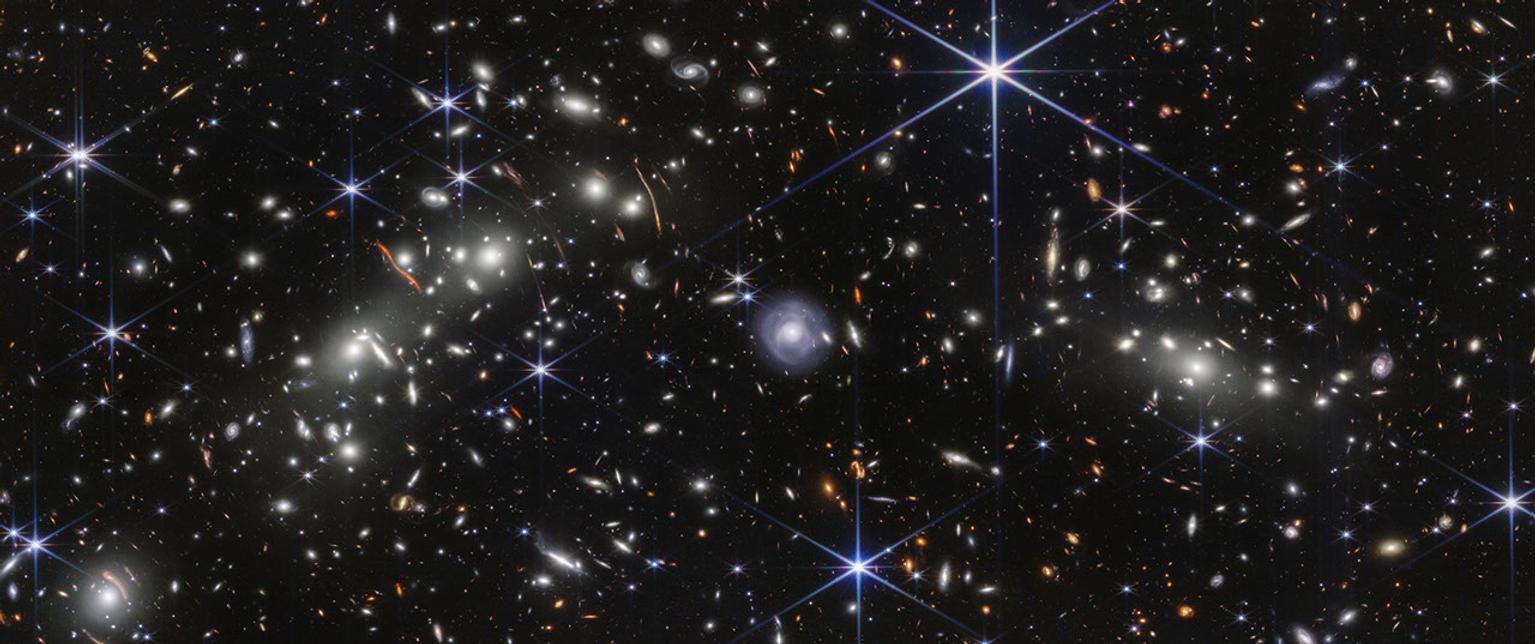
NASA Webb ‘Pierces’ Bullet Cluster, Refines Its Mass – NASA Science
Despite centuries of scientific discoveries, some of the universe’s most fascinating questions remain unanswered. From invisible matter holding galaxies together to the origins of life and the mysteries of human consciousness, researchers continue to explore phenomena that challenge our understanding of reality.
Modern telescopes, particle accelerators, artificial intelligence, and sophisticated laboratory experiments are revealing extraordinary new clues. Yet every major discovery seems to introduce additional questions.
Here are 10 scientific mysteries that continue to fascinate researchers in 2026, and why solving them could transform our understanding of the universe.
1. What Is Dark Matter?
Galaxy cluster MACS J0717.5+3745 with dark matter map | ESA/Hubble
Scientists estimate that dark matter makes up approximately 27% of the universe’s total matter-energy content. Unlike ordinary matter, it does not emit, absorb, or reflect light, making it invisible to conventional telescopes.
Researchers infer its presence through gravitational effects, including the movement of stars within galaxies and the bending of light around massive cosmic structures.
In January 2026, scientists using the James Webb Space Telescope produced an exceptionally detailed map of dark matter, providing new insights into how invisible mass shapes the universe.
The mystery: What is dark matter actually made of? Could it consist of undiscovered fundamental particles, or does our understanding of gravity need revision?NASA Science+1
2. What Is Dark Energy?
Astronomers discovered in the late 1990s that the expansion of the universe is accelerating rather than slowing down as expected.
Scientists use the term dark energy to describe the unknown phenomenon responsible for this cosmic acceleration.
Dark energy is estimated to account for approximately 68–70% of the universe’s total matter-energy content.
Possible explanations include a cosmological constant associated with empty space or a more complex form of energy that evolves over time.
The mystery: Why is the universe expanding faster, and does dark energy remain constant throughout cosmic history?
Understanding dark energy could help scientists predict the ultimate fate of the universe. NASA Science+1
3. How Did Life Begin on Earth?
Química redox de la Tierra primitiva y el origen de la vida · Clear Sky Science
Earth formed approximately 4.5 billion years ago, and evidence suggests life emerged relatively early in its history.
But exactly how nonliving chemicals developed into systems capable of reproduction and evolution remains unknown.
Scientists investigate several possibilities, including chemical reactions near deep-sea hydrothermal vents, complex molecules forming in shallow pools, and organic materials delivered by meteorites.
Laboratory experiments demonstrate that some biological building blocks can arise through natural chemical processes, but researchers have not established a complete historical pathway from simple chemistry to the first living organisms.
The mystery: How did molecules become self-replicating systems that eventually developed into cells?
Solving this question could also help researchers understand whether life might arise elsewhere in the universe. NASA Science+1
4. What Creates Human Consciousness?
The human brain contains billions of neurons communicating through enormous networks of electrical and chemical signals.
Scientists have made remarkable progress in identifying brain processes associated with attention, memory, perception, and awareness.
However, a deeper question remains: How do physical processes in the brain produce subjective experiences, such as feeling pain, appreciating music, or recognizing oneself?
Researchers are investigating competing theories involving integrated information, global neural communication, and recurrent brain activity.
The mystery: Why does information processing sometimes produce a conscious experience, rather than simply an automatic response?
Consciousness remains one of the most challenging questions at the intersection of neuroscience, psychology, and philosophy. PMC
5. Why Is There More Matter Than Antimatter?
According to modern particle physics, matter and antimatter have closely related properties.
When a particle meets its corresponding antiparticle, the pair can annihilate, converting their mass into energy.
Yet the observable universe consists overwhelmingly of matter.
Researchers believe a small imbalance between matter and antimatter arose in the early universe. The known differences in their behavior are not sufficient to explain the imbalance completely.
In 2025, CERN’s LHCb experiment reported important evidence of matter-antimatter asymmetry in the decays of baryons, offering another clue.
The mystery: What physical mechanism allowed matter to survive and form the galaxies, planets, and living things we observe today? CERN+1
6. What Causes Fast Radio Bursts?
Fast radio bursts, or FRBs, are extremely brief but powerful flashes of radio waves detected from space.
Some last only milliseconds, yet they can release enormous quantities of energy.
Astronomers have linked at least some of these bursts to magnetars, extraordinarily magnetic neutron stars. However, the complete range of physical mechanisms that produce FRBs remains uncertain.
In October 2026, observations involving the James Webb Space Telescope helped astronomers investigate the host galaxy of an exceptionally distant fast radio burst.
The mystery: Do all fast radio bursts originate from magnetars, or can other extreme cosmic events produce them?
Their study may reveal new information about neutron stars, distant galaxies, and matter between galaxies. NASA Science+1
7. Can Quantum Mechanics and Gravity Be Unified?
Two of the most successful theories in science describe reality in remarkably different ways.
Einstein’s general relativity explains gravity through the curvature of spacetime, while quantum mechanics describes the behavior of matter and energy at extremely small scales.
Both theories work extraordinarily well within their established domains. However, combining them into a single consistent framework remains a major challenge, particularly in extreme conditions such as the interiors of black holes.
Researchers are investigating string theory, loop quantum gravity, and possible experimental signatures of quantum spacetime.
The mystery: Is spacetime fundamentally continuous, or does it possess a quantum structure at incredibly small scales?
New experimental proposals discussed in 2026 could help scientists test whether gravity has genuinely quantum properties. Quantum Gravity Tests Coming Soon
8. Why Do Neutrinos Have Mass?
Super-Kamiokande Visualization | NOIRLab
Neutrinos are extraordinarily elusive elementary particles that pass through enormous amounts of matter with very little interaction.
Scientists have established that neutrinos possess mass because they can change between different types, a phenomenon called neutrino oscillation.
However, their precise individual masses and the mechanism responsible for generating them remain uncertain.
Experiments such as KATRIN, JUNO, and DUNE are designed to investigate different aspects of neutrino physics.
The mystery: Why are neutrinos so much lighter than other known matter particles, and could their unusual properties reveal physics beyond the Standard Model?
Understanding neutrinos might even help explain the early evolution of the universe. CERN+2
9. Why Do Measurements of the Universe’s Expansion Disagree?
Scientists use several methods to calculate how quickly the universe is expanding.
One approach measures distances to nearby galaxies using stars and supernovae. Another infers the expansion rate from observations of the cosmic microwave background, ancient radiation left over from the early universe.
Surprisingly, these approaches produce different results.
This discrepancy is known as the Hubble tension.
Some researchers suspect unidentified systematic measurement errors. Others investigate whether the disagreement points toward additional particles, changes in early-universe physics, or new aspects of dark energy.
The mystery: Is the Hubble tension a measurement problem, or is it evidence that our current cosmological model is incomplete?
Solving it could fundamentally reshape modern cosmology. NASA Science
10. Are We Alone in the Universe?
NASA Wants to Photograph the Surface of an Exoplanet | WIRED
Perhaps no scientific question captures the imagination quite like the possibility of life beyond Earth.
Astronomers have confirmed thousands of planets orbiting stars outside our solar system, including worlds that may possess conditions suitable for liquid water.
Researchers are studying planetary atmospheres, searching for potentially biological chemical signatures, and investigating environments such as Mars and the icy moons of Jupiter and Saturn.
Despite these discoveries, scientists have not confirmed the existence of extraterrestrial life.
The mystery: Is life common throughout the universe, or is Earth an exceptionally rare example?
Even discovering simple microbial organisms elsewhere would revolutionize biology, astronomy, and humanity’s understanding of its place in the cosmos. NASA Science+1
Why These Scientific Mysteries Matter
These ten mysteries represent more than unanswered questions. Each could lead to discoveries with enormous implications for physics, biology, technology, and our understanding of existence.
A breakthrough in dark matter research could reveal previously unknown particles. Understanding the origin of life could transform astrobiology. Discovering the mechanisms of consciousness could reshape neuroscience.
The most exciting aspect of science is that what we do not yet know continues to drive what we discover next.
As scientific instruments become more advanced, some mysteries may finally be solved, while entirely new questions emerge.
Frequently Asked Questions
What is the greatest unsolved mystery in science?
There is no universally agreed ranking. Dark matter, dark energy, the origin of life, consciousness, and quantum gravity are all major unresolved scientific problems.
How much of the universe remains unexplained?
In the standard cosmological model, dark matter and dark energy together account for approximately 95% of the universe’s total matter-energy content. Their fundamental nature remains unknown.
Could scientists solve these mysteries in our lifetime?
Possibly. Some questions may yield major breakthroughs as new observatories and experiments collect data, while others could remain unresolved for generations.
Why is solving scientific mysteries important?
Fundamental discoveries often lead to unexpected technologies, improved scientific methods, and more accurate explanations of the natural world.
WordPress SEO Settings
SEO title Copy
10 Scientific Mysteries That Still Fascinate Researchers
URL slug Copy
10-scientific-mysteries-that-still-fascinate-researchers
Meta description Copy
Explore 10 unsolved scientific mysteries, from dark matter and consciousness to the origins of life and the search for extraterrestrial life.
Focus keyphrase
unsolved scientific mysteries
Category
Science & Discovery
Suggested tags
Scientific Mysteries, Unsolved Mysteries, Science, Dark Matter, Dark Energy, Universe, Space Exploration, Quantum Physics, Consciousness, Origin of Life, Antimatter, Neutrinos, Fast Radio Bursts, Astronomy, Scientific Discoveries
Copy all tags
Suggested featured image
«Джеймс Уэбб» обнаружил две самые древние из известных галактик. Фото | РБК Life
Suggested image alt text: “Scientific mysteries of the universe illustrated by distant galaxies observed in deep space.” Use an appropriately licensed NASA image and verify its usage guidelines and credit before publishing.
Scientific references
For authoritative background and further reading, consult NASA: Dark Matter, NASA: Dark Energy, CERN: Antimatter, and NASA: Search for Life.
Editorial status: Article and SEO metadata prepared for WordPress; not published.