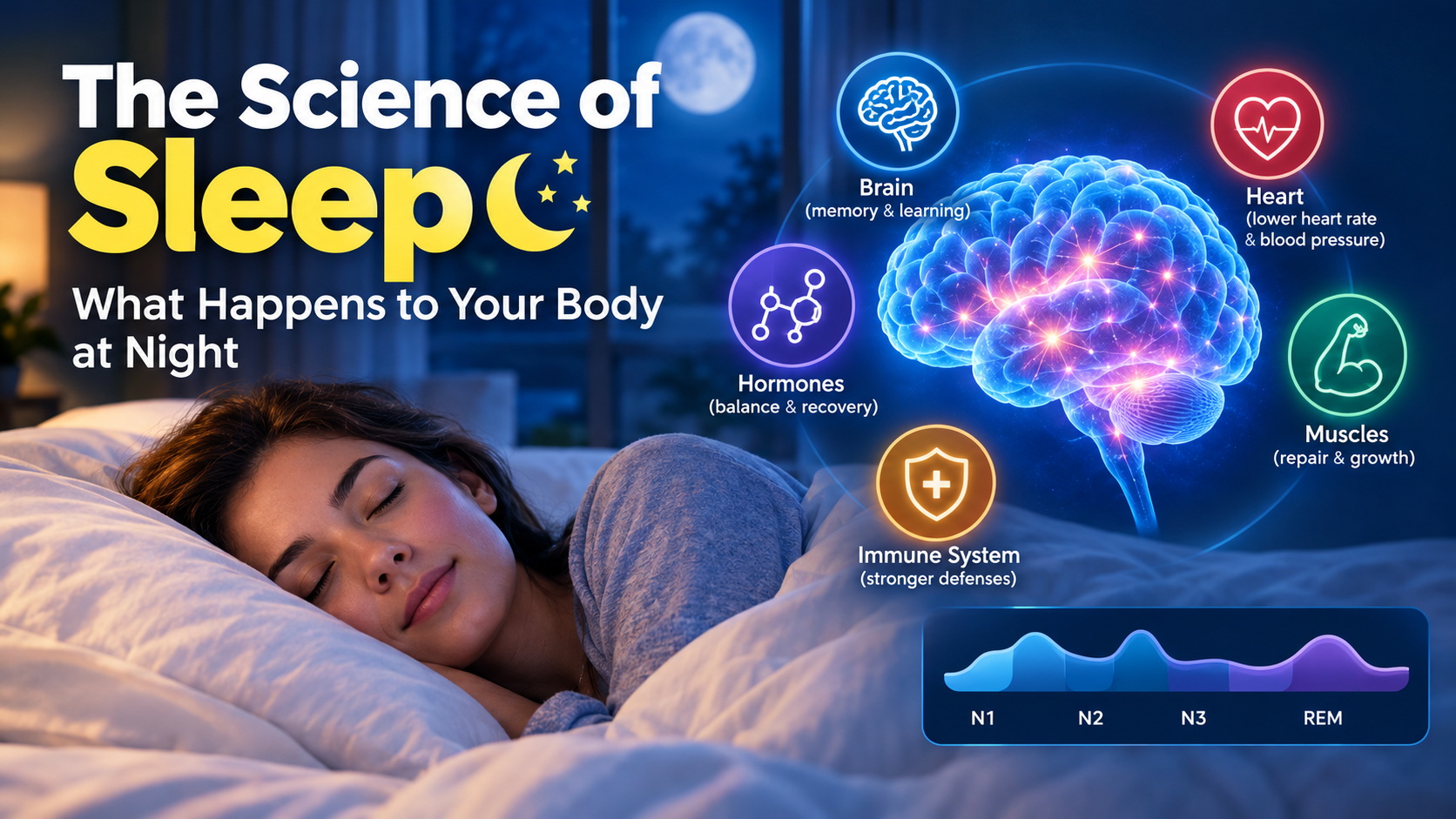

The Science of Sleep: What Happens to Your Body at Night
Discover how your brain, heart, hormones, and muscles work together while you sleep—and why quality rest is essential for your health.

Sleep is much more than closing your eyes and resting. Every night, your body performs a remarkable series of biological processes that support memory, physical recovery, emotional balance, and long-term health.
Although you may appear completely inactive while sleeping, your brain remains busy, your hormones fluctuate, and your body moves through different stages of restoration.
Understanding what happens during sleep can help explain why getting enough rest is one of the most important things you can do for your health.
1. Understanding the Four Stages of Sleep
Human sleep consists of three non-rapid eye movement (NREM) stages and one rapid eye movement (REM) stage.
A sleep cycle generally lasts around 80–100 minutes, and most people experience four to six cycles throughout the night.
Falling Asleep
Light Sleep
Deep Sleep
Dream Sleep
Stage 1: Falling Asleep (N1)
This is the transition between wakefulness and sleep. Your muscles begin to relax, your heartbeat slows, and your brain activity changes.
You might experience a sudden muscle twitch or a sensation of falling, known as a hypnic jerk.
Stage 2: Light Sleep (N2)
Your body temperature decreases, your breathing becomes more regular, and your heart rate slows further.
The brain produces distinctive activity patterns called sleep spindles, which are associated with learning and memory processing.
Stage 3: Deep Sleep (N3)
Deep sleep, also called slow-wave sleep, is especially important for physical recovery.
During this stage, the body supports tissue repair, releases growth hormone, and carries out processes important for restoration.
Deep sleep is generally more concentrated during the earlier part of the night.
Stage 4: REM Sleep
REM sleep involves increased brain activity and is strongly associated with vivid dreams.
Your eyes move rapidly beneath your eyelids, while most voluntary muscles become temporarily inactive, helping prevent you from acting out your dreams.
REM periods generally become longer toward morning.
2. Your Brain Processes Memories and Information

While you sleep, your brain processes information collected throughout the day.
Sleep contributes to strengthening important memories, supporting learning, and regulating emotions.
Scientists are also studying how sleep influences the movement of fluids involved in removing metabolic waste products from the brain. The precise mechanisms and long-term implications in humans are still being investigated.
These processes help explain why a good night’s sleep supports concentration, problem-solving, and remembering new information.
Sleep contributes to memory consolidation, helping your brain retain and organize information learned during waking hours.
3. Your Body Repairs Muscles and Tissues
Sleep plays an important role in physical recovery.
During deep sleep, the body releases growth hormone, which supports tissue maintenance and repair. Other processes throughout sleep contribute to muscle recovery and healthy cellular function.
This is especially important for people who exercise regularly, perform physically demanding activities, or are recovering from illness.
Recovery is not limited to deep sleep; the entire sleep period contributes to maintaining normal body functions.
4. Your Heart and Blood Pressure Change
Your cardiovascular system behaves differently during sleep.
During much of non-REM sleep, heart rate and blood pressure generally decrease, allowing the cardiovascular system to operate under different conditions from wakefulness.
During REM sleep, heart rate and blood pressure can become more variable.
Consistently inadequate sleep is associated with increased risks of high blood pressure, cardiovascular disease, and stroke.
Getting sufficient sleep is therefore an important part of supporting long-term heart health.
5. Your Hormones Follow Their Nightly Rhythm
Your internal biological clock, known as the circadian rhythm, helps regulate hormone production and daily patterns of alertness and sleepiness.
- Melatonin: Signals that nighttime has arrived and helps regulate sleep timing.
- Growth hormone: Supports growth, tissue maintenance, and recovery.
- Cortisol: Normally increases toward morning, helping prepare the body to wake up.
- Appetite-related hormones: Sleep influences biological systems involved in hunger, metabolism, and energy regulation.
Exposure to bright artificial light late at night can interfere with normal melatonin timing and make falling asleep more difficult.
6. Your Immune System Continues Working
Sleep supports the immune system, which protects your body against infections and illness.
While you sleep, immune cells and signaling molecules participate in activities that help coordinate immune responses.
Repeatedly sleeping too little can disrupt normal immune function and contribute to poorer overall health.
This is one reason adequate sleep matters when recovering from an illness.
7. What Happens Throughout an Eight-Hour Night?
Your sleep stages do not remain constant throughout the night.
During the first part of sleep, deep NREM sleep is generally more prominent. As morning approaches, REM episodes usually become longer.
A Typical Night’s Sleep
Illustrative progression—not an exact sleep schedule
Real sleep follows a more complex pattern, with repeated transitions between stages and occasional brief awakenings.
Cutting sleep short regularly can reduce the opportunity to experience important later-night stages.
8. How Much Sleep Do You Really Need?
Sleep requirements change with age and individual circumstances.
| Age Group | Recommended Daily Sleep |
|---|---|
| Children (6–12 years) | 9–12 hours |
| Teenagers (13–17 years) | 8–10 hours |
| Adults (18–60 years) | At least 7 hours |
| Adults (61–64 years) | 7–9 hours |
| Adults (65+ years) | 7–8 hours |
Source: US Centers for Disease Control and Prevention (CDC).
9. Seven Practical Tips for Better Sleep

- Maintain a regular schedule. Go to bed and wake up at approximately the same time every day.
- Get natural daylight. Morning light helps regulate your body’s internal clock.
- Limit caffeine later in the day. Its stimulating effects can last several hours.
- Keep your bedroom comfortable. A cool, dark, quiet environment generally supports better sleep.
- Reduce bright light before bedtime. Dim the lights and limit stimulating screen activities.
- Exercise regularly. Physical activity can improve sleep quality, although intense exercise immediately before bedtime may disturb some people.
- Create a relaxing evening routine. Reading, gentle stretching, or quiet activities can help prepare your body for sleep.
Conclusion: Sleep Is Essential for Life
Sleep is not simply a break from daily activities. It is a complex biological process supporting nearly every major system in your body.
From strengthening memories and regulating hormones to supporting your immune system and physical recovery, sleep helps you function at your best.
The key lesson is simple: prioritize both the quantity and quality of your sleep.
Maintaining a consistent sleep routine can improve your energy, concentration, mood, and overall health.
Scientific Sources
- National Institutes of Health — Sleep Phases and Stages
- National Institutes of Health — Sleep/Wake Cycle
- CDC — About Sleep
- NICHD — What Happens During Sleep?
Image credits: Ryan Ancill, Shawn Day, Clay Banks. Images used under the Unsplash License.
This article is provided for general educational purposes and does not replace professional medical advice.