
The Most Amazing Discoveries of the 21st Century
Science & Discovery | October 2026 | 10 extraordinary breakthroughs


From discovering particles that help explain the universe to decoding human DNA and exploring the possibility of life on Mars, the 21st century has transformed our understanding of reality.
Introduction
The 21st century has brought some of the most extraordinary scientific breakthroughs in human history. Researchers have developed new ways to study the universe, uncover the building blocks of life, and investigate mysteries that once seemed impossible to solve.
These discoveries are more than scientific achievements. They are changing medicine, technology, astronomy, and our understanding of humanity’s place in the cosmos.
Here are ten remarkable discoveries and breakthroughs that are shaping our world.
1. The Higgs Boson: Discovering a Fundamental Particle (2012)

On July 4, 2012, physicists at CERN announced the discovery of a particle consistent with the long-predicted Higgs boson.
Using the Large Hadron Collider, the ATLAS and CMS experiments provided evidence for the particle associated with the Higgs field, which helps explain how elementary particles acquire mass.
Why it matters: The discovery confirmed a central prediction of the Standard Model of particle physics and opened new opportunities to investigate the fundamental structure of matter.
CERN
+1
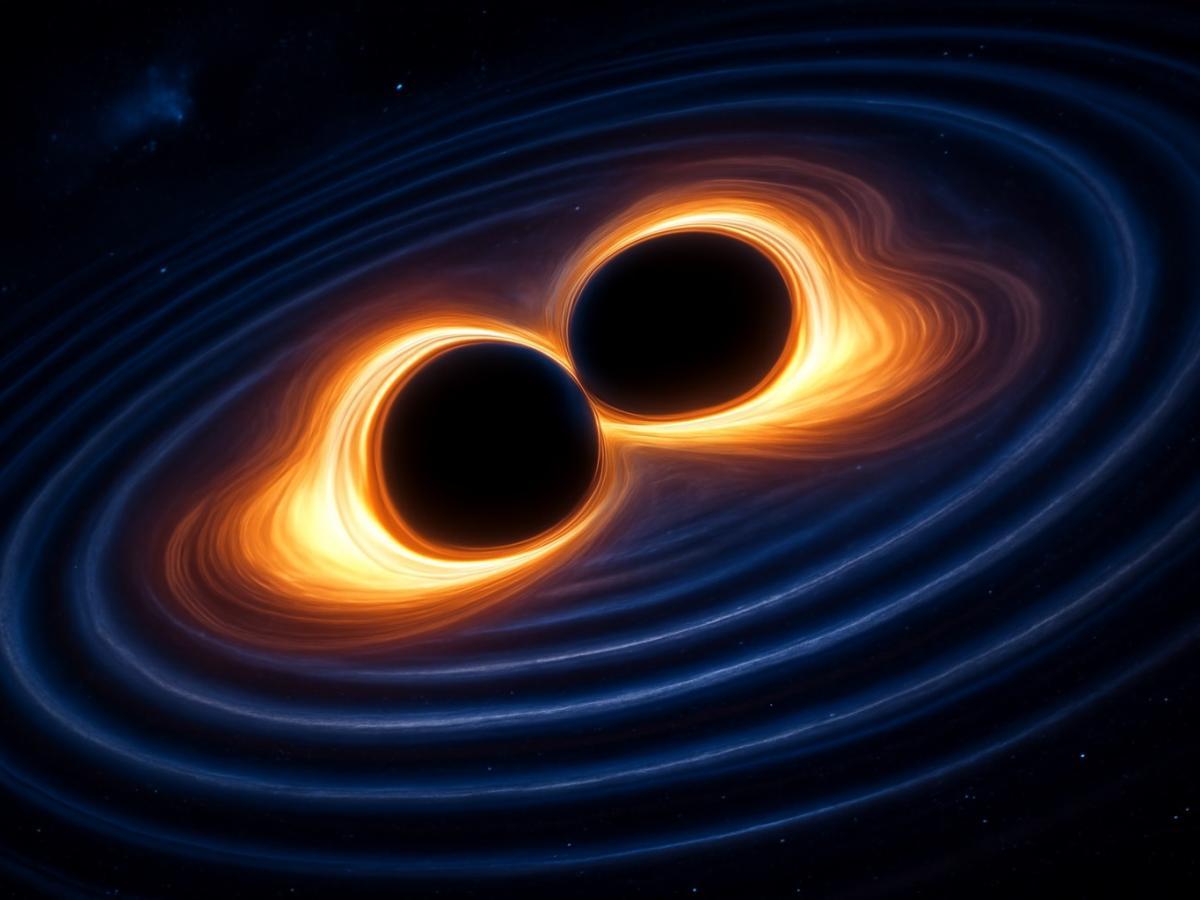
2. Gravitational Waves: Hearing the Universe (2015)

In September 2015, the Laser Interferometer Gravitational-Wave Observatory (LIGO) made the first direct detection of gravitational waves, announced in February 2016.
These tiny ripples in spacetime originated from the merger of two black holes approximately 1.3 billion years ago.
The discovery confirmed a major prediction of Albert Einstein’s general theory of relativity.
Why it matters: Scientists gained an entirely new way to observe the cosmos, allowing them to study black holes and other extreme astronomical events through gravitational waves rather than light alone.
Caltech
3. Completing the Human Genome (2003–2022)

The Human Genome Project reached a historic milestone in 2003, producing a nearly complete reference sequence of human DNA.
However, approximately 8% of the genome remained unresolved.
In 2022, the Telomere-to-Telomere Consortium published the first essentially gap-free sequence of a human genome, revealing previously inaccessible regions of our genetic code.
Why it matters: More complete genome references improve research into genetic variation, inherited diseases, chromosome biology, and potential new medical treatments.
National Institutes of Health (NIH)
+1
4. CRISPR: The Gene-Editing Revolution (2012–Present)

CRISPR-Cas9 transformed biological research by giving scientists a powerful way to modify DNA at specific locations.
The system was adapted into a programmable gene-editing technology in 2012, building on discoveries about how bacteria defend themselves against viruses.
Researchers can use this technology to investigate genes, engineer crops, and develop treatments for certain genetic diseases.
Why it matters: Gene editing has moved from laboratory experiments toward real medical applications, including approved CRISPR-based treatments for certain patients with sickle cell disease.
In December 2023, the US Food and Drug Administration approved Casgevy, the first FDA-approved treatment using CRISPR/Cas9 technology.
FDA
5. The First Image of a Black Hole (2019)

On April 10, 2019, the Event Horizon Telescope collaboration unveiled the first image revealing the shadow of a black hole.
The image showed the supermassive black hole M87*, approximately 55 million light-years from Earth, surrounded by glowing material.
The extraordinary achievement required combining observations from radio telescopes across the planet.
Why it matters: It provided direct visual evidence of the environment around a black hole and enabled new tests of our understanding of gravity under extreme conditions.
Event Horizon Telescope
6. Thousands of Planets Beyond Our Solar System (2001–Present)

For centuries, humans wondered whether planets existed around other stars.
Although the first confirmed exoplanets were discovered before the 21st century, modern space telescopes have revolutionized the search.
NASA reached 5,000 confirmed exoplanets in March 2022, and the catalog has since surpassed 6,000.
Scientists have identified rocky planets, enormous gas giants, worlds orbiting two stars, and planets located within their stars’ potentially habitable zones.
Why it matters: Every newly discovered world helps researchers understand how planetary systems form and where conditions suitable for life might exist.
NASA
+1
7. Artificial Intelligence Solves Protein-Structure Problems (2020–2024)

Proteins are essential to life, but determining their three-dimensional structures has traditionally required extensive laboratory work.
AlphaFold, an artificial intelligence system developed by DeepMind, demonstrated remarkable accuracy in predicting protein structures from amino acid sequences.
By 2022, its database contained predictions for more than 200 million protein structures.
In 2024, AlphaFold’s contributions were recognized with a Nobel Prize in Chemistry shared by Demis Hassabis and John Jumper, alongside David Baker for computational protein design.
Why it matters: AI-assisted structural biology is accelerating research into disease, enzymes, medicines, and biological processes.
Google DeepMind
8. Nuclear Fusion Ignition: Recreating the Power of Stars (2022–2025)

In December 2022, researchers at the National Ignition Facility in California achieved a historic fusion ignition milestone.
For the first time in this type of laboratory experiment, fusion reactions released more energy than the laser energy delivered to the fuel target.
Scientists subsequently repeated the achievement, including an April 2025 experiment that produced approximately 8.6 megajoules of fusion energy.
Why it matters: The milestone advances understanding of controlled nuclear fusion, although a practical power plant must overcome further challenges involving total energy efficiency, repeated operation, and engineering costs.
Extreme Light, Matter, and Fusion
+1
9. Discovering the Denisovans: A Previously Unknown Human Relative (2010)

In 2010, genetic analysis of ancient remains from Denisova Cave in Siberia revealed a previously unidentified group of ancient humans: the Denisovans.
The discovery was remarkable because scientists identified the group largely through DNA rather than a complete skeleton.
Further genetic evidence showed that Denisovans interbred with ancestors of some modern human populations.
Why it matters: This discovery transformed our understanding of human evolution, revealing that our family tree was more interconnected and complex than previously understood.
Nature
10. New Clues About Ancient Life on Mars (2025–2026)

Could life have existed on Mars?
In September 2025, NASA reported that a rock sample collected by the Perseverance rover contained potential biosignatures—features that might be associated with ancient microbial activity.
In April 2026, further analysis of a different rock sample collected by the Curiosity rover revealed an unusually diverse collection of organic molecules.
Neither discovery proves that life existed on Mars. Nonbiological processes remain possible explanations.
Why it matters: These findings strengthen scientific interest in ancient Martian environments and help guide future investigations into whether life ever developed beyond Earth.
NASA
+1
The discoveries at a glance
| Year | Discovery or breakthrough | Field |
|---|---|---|
| 2010 | Denisovans identified through DNA | Human evolution |
| 2012 | Higgs boson discovered | Physics |
| 2012 onward | CRISPR gene-editing revolution | Biotechnology |
| 2015 | Gravitational waves detected | Astronomy |
| 2019 | First black hole image | Astrophysics |
| 2020–2024 | AlphaFold breakthroughs | Artificial intelligence |
| 2022 | Essentially complete human genome | Genetics |
| 2022 | More than 5,000 exoplanets confirmed | Space science |
| 2022 | Fusion ignition demonstrated | Energy research |
| 2025–2026 | New potential biosignatures and organic molecules on Mars | Planetary science |
Conclusion: The Greatest Discoveries May Still Be Ahead
The first quarter of the 21st century has already changed how humanity understands life, matter, energy, and the universe.
Scientists can now detect collisions between black holes, study the genetic instructions of living organisms in unprecedented detail, and use artificial intelligence to solve previously difficult scientific problems.
Yet some of the biggest questions remain unanswered.
Does life exist elsewhere in the universe? What are dark matter and dark energy? Can nuclear fusion become a commercially viable power source? How far can gene editing and artificial intelligence transform medicine?
The discoveries of tomorrow may be even more extraordinary than those we celebrate today.
Human curiosity has always driven progress. And the more we discover, the more we realize how much remains unknown.
SEO and publishing details
SEO title: The Most Amazing Discoveries of the 21st Century: 10 Scientific Breakthroughs
Meta description: Explore 10 amazing discoveries of the 21st century, from the Higgs boson and gravitational waves to CRISPR, black holes, AI, and life on Mars.
Suggested URL slug: most-amazing-discoveries-21st-century
Focus keyword: Amazing discoveries of the 21st century
Secondary keywords: Scientific discoveries, greatest discoveries, 21st-century breakthroughs, science facts, space discoveries, genetic discoveries
Category: Science & Knowledge
Recommended multimedia for publication
Featured image concept

For the article’s multimedia package, use the 10 section images above as visual references, then source appropriately licensed versions with credits before publishing.
Three useful video resources:
- CERN — Higgs boson discovery videos
- LIGO — Gravitational wave discovery
- Event Horizon Telescope — Black hole explanations
Publication status: Article prepared in chat; not published to a website. Images shown are illustrative references, not a verified licensed media library.