
The Greatest Inventions That Changed Humanity
History • Science • Technology • Human Civilization
Throughout history, human progress has been shaped by extraordinary inventions. From the wheel and the printing press to electricity, computers, and artificial intelligence, these breakthroughs have transformed how people live, communicate, travel, work, and understand the world.
Some inventions changed a single industry. Others reshaped entire civilizations. Here are 15 of the most influential inventions in human history.
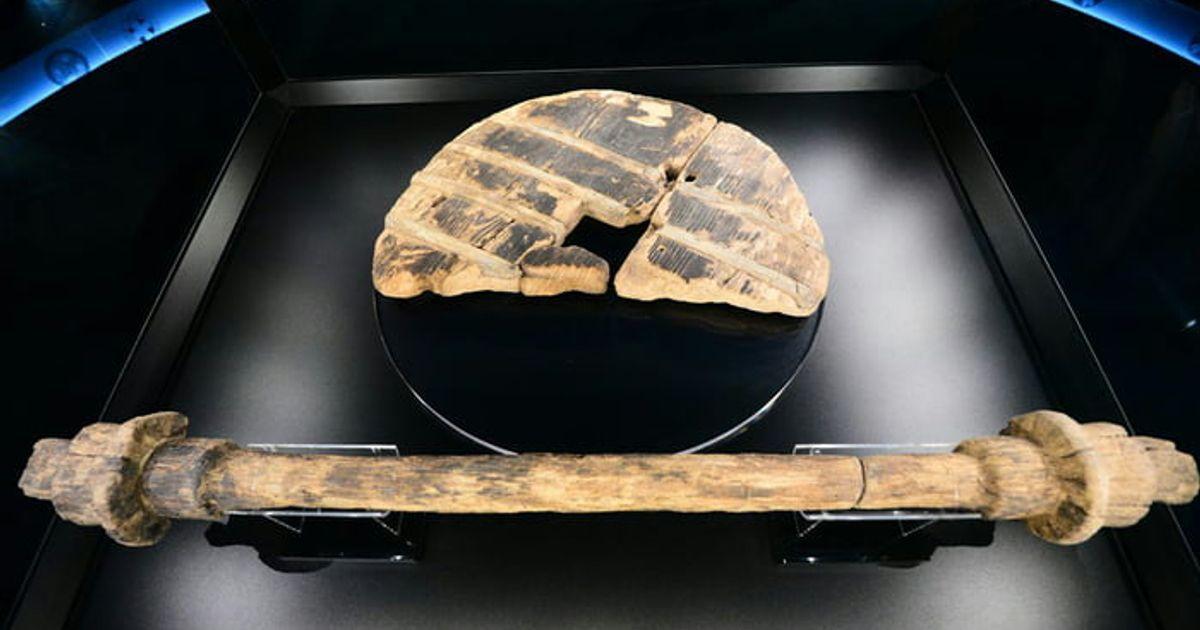
1. The Wheel — Around 3500 BCE

One of humanity’s most important mechanical inventions, the wheel revolutionized transportation and manufacturing.
The earliest known wheels appeared in Mesopotamia and surrounding regions during the fourth millennium BCE, initially associated with pottery and later wheeled vehicles.
Impact: Enabled wheeled transport, mechanical systems, and more efficient movement of goods.
2. Writing Systems — Around 3400–3200 BCE

Writing allowed humans to preserve information beyond individual memory, helping civilizations develop laws, commerce, science, literature, and administration.
Early writing systems emerged in Mesopotamia and ancient Egypt.
Impact: Made permanent records, organized government, education, and the transmission of knowledge possible.
3. The Printing Press — Around 1450

Although printing techniques existed earlier in East Asia, Johannes Gutenberg’s development of a practical movable-metal-type printing system in Europe transformed the mass production of books.
Printed material became increasingly accessible, accelerating the spread of scientific discoveries, religious ideas, and education.
Impact: Helped democratize access to knowledge and accelerate the Scientific Revolution.
4. The Steam Engine — 18th Century

Improved by engineers such as Thomas Newcomen and James Watt, steam engines became central to the Industrial Revolution.
They powered factories, mines, railways, and ships, reducing reliance on human and animal labor.
Impact: Accelerated industrialization, mechanized manufacturing, and modern transportation.
5. Vaccination — 1796

Edward Jenner demonstrated the principle of smallpox vaccination in 1796, building upon earlier practices of inoculation.
Vaccination subsequently became one of medicine’s most powerful methods of preventing infectious diseases.
Impact: Saved countless lives and contributed to the worldwide eradication of smallpox, officially declared in 1980.
6. The Electric Light Bulb — 19th Century

Electric lighting developed through the work of multiple inventors, including Joseph Swan and Thomas Edison, who helped make practical incandescent lighting commercially viable.
Electric light transformed cities, workplaces, homes, and nighttime activities.
Impact: Extended productive hours and supported widespread electrification.
7. The Telephone — 1876

Alexander Graham Bell received a landmark US patent for the telephone in 1876, amid contributions and competing claims from other inventors.
The telephone transformed long-distance personal and business communication, forming a foundation for modern telecommunications.
Impact: Made real-time voice communication across great distances possible.
8. The Automobile — Late 19th Century

Karl Benz’s 1885–1886 Patent-Motorwagen became a landmark in the development of practical gasoline-powered automobiles.
Cars reshaped urban development, transportation infrastructure, commerce, and personal mobility.
Impact: Enabled independent motorized travel and transformed global transportation.
9. The Airplane — 1903

On December 17, 1903, the Wright brothers achieved the first widely recognized sustained, controlled, powered flight of a heavier-than-air aircraft.
Aviation subsequently transformed international travel, trade, emergency services, and global connectivity.
Impact: Made rapid long-distance travel and modern global aviation possible.
10. Antibiotics — 20th Century

Alexander Fleming discovered penicillin’s antibacterial properties in 1928. Later scientists, including Howard Florey and Ernst Chain and their teams, helped turn penicillin into a practical treatment.
Antibiotics made many previously deadly bacterial infections treatable and greatly improved the safety of surgery.
Impact: Revolutionized modern medicine and the treatment of bacterial diseases.
11. The Transistor — 1947

Developed at Bell Labs by John Bardeen, Walter Brattain, and William Shockley, the transistor became a fundamental building block of modern electronics.
It replaced many functions of bulky vacuum tubes, allowing electronic devices to become smaller, faster, and more energy-efficient.
Impact: Enabled modern computers, smartphones, satellites, and digital technology.
12. The Modern Computer — 20th Century

Modern computing emerged through the contributions of many pioneers, including Alan Turing, Konrad Zuse, John von Neumann, and the teams behind early electronic computers such as ENIAC.
Computers transformed calculations, scientific research, business, engineering, and everyday life.
Impact: Made large-scale information processing, automation, and digital industries possible.
13. The Internet — 1960s–1990s

The internet developed from early computer-networking research, including ARPANET, and expanded through TCP/IP networking.
The World Wide Web, created by Tim Berners-Lee in 1989, later made accessing and sharing information across the internet much easier.
Impact: Revolutionized global communication, education, commerce, entertainment, and access to information.
14. Global Positioning System (GPS) — Late 20th Century

Developed by the United States Department of Defense and later made widely available for civilian use, GPS transformed how people navigate and determine location.
Satellite positioning now supports transportation, agriculture, logistics, emergency response, and smartphones.
Impact: Enabled precise global navigation, location-based services, and more efficient transportation.
15. Artificial Intelligence — 20th–21st Centuries

Artificial intelligence developed as a research field in the 1950s and has progressed through machine learning, neural networks, and modern generative AI.
Today, AI systems assist with scientific research, medical analysis, software development, education, and creative work.
Impact: Expands the range of tasks computers can perform, although its ultimate long-term influence remains uncertain.
Comparing the inventions that changed civilization
| Invention | Approximate period | Major contribution |
|---|---|---|
| Wheel | 3500 BCE | Transport and mechanics |
| Writing | 3400 BCE | Knowledge preservation |
| Printing press | 1450 | Mass communication |
| Steam engine | 1700s | Industrialization |
| Vaccination | 1796 | Disease prevention |
| Electric lighting | 1800s | Modern daily life |
| Telephone | 1876 | Instant voice communication |
| Automobile | 1880s | Personal mobility |
| Airplane | 1903 | Global travel |
| Antibiotics | 1900s | Infection treatment |
| Transistor | 1947 | Modern electronics |
| Computer | 1900s | Digital processing |
| Internet | 1960s onward | Global connectivity |
| GPS | Late 1900s | Satellite navigation |
| Artificial intelligence | 1950s onward | Intelligent automation |
What will be the next world-changing invention?
Several emerging technologies have the potential to transform humanity further, including commercially viable nuclear fusion, quantum computing, advanced robotics, regenerative medicine, and new energy-storage technologies.
Their success is not guaranteed, but they could eventually influence civilization as profoundly as electricity, the transistor, or the internet.
Conclusion
The greatest inventions in human history share a defining characteristic: they expanded what humanity could accomplish.
The wheel expanded mobility. Writing preserved knowledge. The printing press spread ideas. Vaccination and antibiotics protected lives. Computers and the internet connected the world.
Artificial intelligence may become another transformative chapter in this story, but the history of invention teaches an even greater lesson: progress comes not from a single discovery, but from generations of people building upon one another’s ideas.
Humanity’s greatest invention may ultimately be its ability to keep inventing.
Suggested SEO title: 15 Greatest Inventions That Changed Humanity and Shaped the Modern World
Meta description: Explore 15 of the greatest inventions in human history, from the wheel and printing press to computers, the internet, and artificial intelligence.