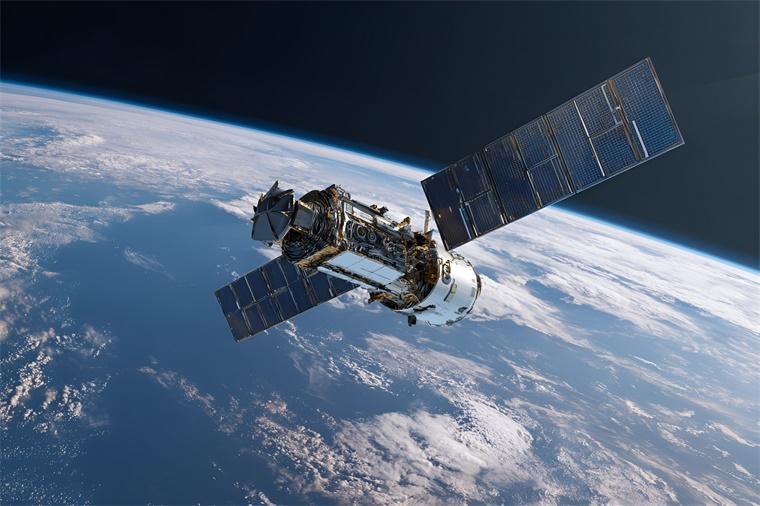

How Satellites Transform Our Everyday Lives
From GPS navigation and internet connectivity to weather forecasting and disaster prevention, satellites have quietly become one of the most important technologies supporting modern civilization.
2025年中国商业遥感卫星产业供应链十大代表性企业:航天电子、长光卫星、中国卫星、航天宏图、四维图新……_产经_前瞻经济学人
Массовое обновление: «Космическая связь» и «Решетнёв» подписали контракты на создание трёх спутников
7
Introduction: The Invisible Technology Above Us
Every day, thousands of satellites orbit Earth, performing tasks that influence almost every aspect of our lives. Although most people rarely think about them, satellites help us navigate unfamiliar roads, communicate across continents, predict dangerous storms, and monitor the health of our planet.
What began as a remarkable achievement of space exploration has evolved into an essential global infrastructure.
Satellites are no longer simply tools for scientists and astronauts. They are fundamental to transportation, agriculture, banking, entertainment, emergency response, and communications.
1. GPS and Navigation: Finding Our Way
Whether you are driving to work, ordering food, booking a taxi, or tracking a delivery, satellite navigation makes it possible.
Global Navigation Satellite Systems (GNSS), including GPS, Galileo, GLONASS, and BeiDou, provide positioning and timing signals that receivers use to calculate their locations.
These systems support:
- Turn-by-turn navigation and location sharing.
- Ride-hailing applications and delivery services.
- Aircraft and ship navigation.
- Fleet tracking and logistics.
- Precision agriculture and land surveying.
Navigation satellites transmit timing signals that allow compatible receivers to calculate their position. The receiver can determine its location without sending a signal back to the satellite.
2. Communication: Connecting the World
Starlink Technology: Redefining Remote Work
Communication satellites enable information to travel across enormous distances, including areas where terrestrial communications infrastructure is unavailable.
They help provide internet access, telephone services, television broadcasting, and emergency connectivity in remote regions.
Satellite communication is particularly valuable for people living or working in deserts, mountainous regions, offshore facilities, and remote islands. Aircraft and ships can also use satellite links to remain connected far from land.
However, most ordinary mobile internet traffic travels through cellular towers and fiber-optic networks rather than directly through satellites.
3. Weather Forecasting: Predicting Tomorrow
New European weather satellite improves forecasting | VTT News
2024 Hurricane Reconnaissance & Response Year in Review
Meteosat-12: Europe’s new weather satellite takes first photos – BBC News
7
Weather satellites continuously monitor clouds, storms, atmospheric moisture, and temperatures.
Their observations help meteorologists detect developing weather systems, improve forecasts, and issue warnings about extreme conditions.
This information is particularly useful for:
- Predicting heavy rainfall and severe storms.
- Tracking hurricanes and tropical cyclones.
- Monitoring dust storms and atmospheric conditions.
- Supporting aviation and maritime safety.
- Planning agricultural operations.
Weather forecasting combines satellite measurements with ground stations, radar, and sophisticated computer models. Together, these technologies provide more accurate warnings and help reduce the effects of dangerous weather events. Earth observation+1
4. Agriculture: Growing Food More Efficiently
Food: Farming in Saudi Arabia | Airbus
Satellites help farmers understand crop health, soil conditions, and water availability.
Earth-observation imagery can reveal differences in vegetation growth and identify areas that may require attention.
Farmers can combine this information with ground measurements to improve irrigation, monitor drought conditions, estimate crop performance, and reduce unnecessary use of resources.
In water-scarce regions such as the Middle East, these capabilities can be especially valuable for efficient agricultural water management.
5. Banking and Financial Systems: Keeping Accurate Time
One of the least visible benefits of satellites is precise time synchronization.
GPS and other navigation satellite systems carry highly accurate timing signals. These signals can help synchronize communications networks, financial systems, and electrical infrastructure.
Precise timing is important for recording transactions, coordinating network operations, and maintaining consistent system clocks.
Satellites do not process every bank transfer, but their timing capabilities support infrastructure that financial institutions and other industries depend on. GPS.gov+1
6. Disaster Management: Saving Lives from Space
International aid arrives amid Pakistan floods | KidsNews
During floods, earthquakes, wildfires, and other emergencies, satellites can provide information about affected areas.
Satellite imagery helps disaster-response teams identify damage, monitor hazards, and organize relief operations.
Specialized satellite systems also detect distress signals from compatible emergency beacons used on ships, aircraft, and in remote outdoor environments.
When ground communication networks are damaged, satellite-based communication can help emergency teams maintain essential contact. Canadian Space Agency+1
7. Environmental Protection: Monitoring Our Planet
Earth-observation satellites are essential tools for studying environmental change.
They measure or help track deforestation, melting ice, changing sea levels, air pollution, ocean temperatures, and land-use patterns.
By observing the same regions repeatedly, scientists can identify long-term environmental trends and changes that may be difficult to detect from ground observations alone.
Satellite data also supports conservation programs, water-resource planning, and the monitoring of vulnerable ecosystems. What is Earth observation?+1
8. Transportation and Global Trade
Transport maritime conteneurisé : une reprise en Europe, des congestions en Asie
Commercial passenger plane flying above clouds
GLOBARA TRADE | Global Trade Solutions & International Business Support
Satellite systems help coordinate the movement of aircraft, ships, trucks, and goods around the world.
They provide location and timing information for transportation networks and help companies monitor vehicles, optimize routes, and manage deliveries.
In aviation and shipping, satellite navigation and communications contribute to operational efficiency and safety, particularly over oceans and remote regions.
9. The Future: Smarter and More Connected Satellites
The satellite industry continues to evolve through smaller spacecraft, reusable launch vehicles, and large constellations operating in low Earth orbit.
Promising developments include expanded satellite broadband coverage, improved environmental monitoring, more frequent Earth imagery, and greater integration with mobile communications.
Artificial intelligence is also becoming increasingly useful for processing the enormous quantities of information collected by Earth-observation satellites.
These innovations could help societies respond more quickly to natural disasters, improve resource management, and connect underserved communities.
10. Challenges of Our Growing Dependence on Satellites
Despite their benefits, satellite systems face important challenges.
Space debris creates collision risks. Solar activity can interfere with satellite operations and navigation signals. Cybersecurity threats, signal interference, and congestion in heavily used orbits can also affect reliability.
As more services become dependent on satellite infrastructure, governments and operators must invest in resilient systems, responsible orbital management, and international cooperation.
Conclusion: Space Technology Is Everyday Technology
Satellites have transformed the way humanity communicates, travels, produces food, manages emergencies, and understands Earth.
Their greatest contribution is not simply what they achieve in space, but how they improve life on the ground.
From checking the weather before leaving home to navigating a busy city or coordinating international transportation, satellites work quietly behind the scenes.
The future of life on Earth is increasingly connected to the technology operating above it.
WordPress SEO package
SEO title
How Satellites Transform Our Everyday Lives | Space Technology Copy title
URL slug
how-satellites-transform-our-everyday-lives Copy slug
Meta description
Discover how satellites transform everyday life through GPS navigation, internet connectivity, weather forecasting, banking, agriculture and disaster response. Copy description
Category
Space & Technology
Focus keyphrase
How Satellites Transform Our Everyday Lives
WordPress tags
Satellites, Space Technology, GPS, Satellite Navigation, Satellite Internet, Earth Observation, Weather Satellites, Communication Satellites, Artificial Intelligence, Space Exploration, Disaster Management, Everyday Technology Copy tags
References
- European Space Agency — Earth Observation
- GPS.gov — What Can GPS Do?
- Canadian Space Agency — Satellites Serving Earth
Suggested featured image: A high-resolution view of Earth from orbit, with a communications satellite in the foreground and subtle visual elements representing navigation, weather, and global connectivity.
Create copy-ready WordPress HTML with picturesCreate a featured post thumbnailCreate a one-page infographic picture