
BIN3AIAH GALLERY | AMAZING FACTS & DISCOVERIES
10 Incredible Facts That Will Surprise You
From animals with three hearts to planets where a day lasts longer than a year, discover ten extraordinary facts that reveal just how fascinating our world and universe really are.


8
The world is full of extraordinary mysteries hiding in plain sight. Some sound like science fiction, while others challenge everything we think we know about nature, space, and life on Earth.
Here are ten scientifically supported facts that might completely change the way you see the world.
1. A day on Venus is longer than its year

Imagine celebrating your birthday before a single day has passed!
Venus takes approximately 243 Earth days to rotate once, but only 225 Earth days to orbit the Sun.
There’s an interesting distinction: the 243-day figure refers to one full rotation, while the time between successive sunrises is approximately 117 Earth days. Venus also rotates in the opposite direction to Earth, so the Sun appears to rise in the west.
Source: NASA Planetary Science
NASA Science
+1
2. Octopuses have three hearts

One heart is impressive enough, but octopuses have three!
Two hearts pump blood through their gills to absorb oxygen. The third pumps oxygen-rich blood around the rest of the body.
Their blood is also blue because it uses a copper-containing protein called hemocyanin to transport oxygen, instead of the iron-containing hemoglobin found in human blood.
Source: NOAA
National Oceanic and Atmospheric Administration
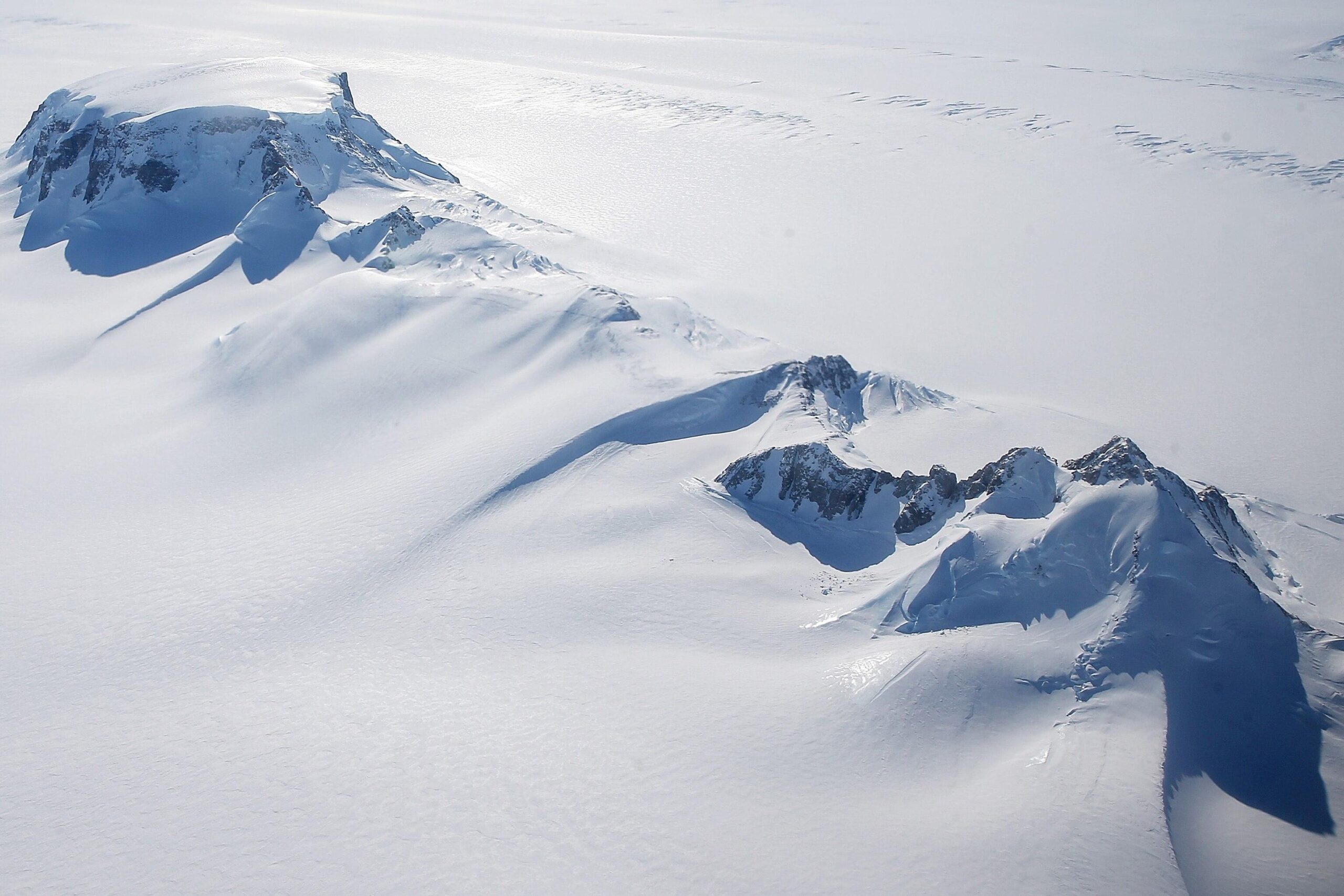
3. Antarctica is the world’s largest desert

communities.springernature.com
When people imagine a desert, they usually picture scorching sand dunes.
But the largest desert on Earth is Antarctica, covering approximately 14 million square kilometers.
A desert is defined primarily by its exceptionally low precipitation, not by its temperature. Antarctica receives so little precipitation that it qualifies as a polar desert, despite being covered in ice.
Sources: British Antarctic Survey and Guinness World Records
British Antarctic Survey
+1
4. Sharks existed before trees

Sharks are among the greatest survivors in evolutionary history.
Early sharks and shark-like animals appeared more than 400 million years ago, before the first recognizable trees emerged around 385 million years ago.
That means the shark lineage was already swimming through ancient oceans millions of years before forests spread across land.
Sources: Smithsonian Ocean and Discover Wildlife
Smithsonian Ocean
+1
5. Saturn could theoretically float in water

Saturn is enormous, yet its average density is lower than that of water.
If you could somehow create an impossibly gigantic pool and maintain Saturn’s structure, its average density suggests that it would float.
Of course, this is only a thought experiment. Saturn is a gas giant without a solid surface, and placing it in water would be physically unrealistic.
Source: NASA
NASA Science
6. The Moon is slowly moving away from Earth

Our Moon isn’t staying in exactly the same place.
It is gradually moving away from Earth at an average rate of approximately 3.8 centimeters per year.
Scientists can measure this movement using laser beams reflected from special mirrors left on the lunar surface during the Apollo missions.
Over millions of years, this gradual separation has influenced Earth’s rotation and the length of our days.
Source: PAGASA Astronomy
PAGASA
7. Wombats produce cube-shaped droppings

Nature sometimes produces shapes that seem almost impossible.
Wombats, Australian marsupials, produce remarkably cube-shaped droppings.
Scientists discovered that variations in the elasticity of their intestines help create these unusual shapes.
The cubes also have a practical advantage: they are less likely to roll away, helping wombats mark their territories.
Source: Science News
Science News
8. Butterflies can taste with their feet

Imagine tasting your food simply by standing on it.
Butterflies have special taste receptors on their feet, allowing them to detect chemicals on plants and other surfaces.
Female butterflies use these receptors to identify suitable plants on which to lay their eggs, giving their caterpillars a better chance of survival.
Sources: American Museum of Natural History and BBC Earth
American Museum of Natural History
+1
9. Most of the deep ocean remains unseen

Despite advanced satellites, underwater robots, and scientific expeditions, much of our ocean remains mysterious.
According to NOAA, by April 2026, only 28.7% of the global seafloor had been mapped using modern high-resolution technology.
Even more astonishing, humans have visually observed less than 0.001% of the deep-ocean seafloor.
Entire ecosystems and undiscovered species may still be waiting to be studied.
Source: NOAA Ocean Exploration
NOAA Ocean Exploration
10. The largest animal ever known is still alive today

You might expect the largest animal in Earth’s history to be an extinct dinosaur.
But the blue whale, which still inhabits our oceans, is the largest animal species known to have ever lived.
Some blue whales grow beyond 30 meters long, and their hearts can weigh around 450 kilograms.
Despite their enormous size, they feed mainly on tiny shrimp-like creatures called krill.
Sources: NOAA Fisheries and Whale and Dolphin Conservation
NOAA Fisheries
+1
The universe is stranger than we imagine
From the enormous blue whale to the mysteries of deep space, these discoveries remind us that even the most familiar parts of our world can hold incredible surprises.
And perhaps the most exciting fact of all is that science continues to uncover things we never imagined possible.
Which of these ten facts surprised you the most?
SEO and publication package
Recommended URL slug Copy
10-incredible-facts-that-will-surprise-you
SEO title
10 Incredible Facts That Will Surprise You | Bin3aiah
Meta description
Discover 10 incredible facts about animals, space, oceans, and Earth. From three-hearted octopuses to the world’s largest desert, prepare to be amazed.
Suggested categories
Amazing Facts, Nature, Science, Space, Discoveries
Focus keywords
incredible facts, amazing facts, surprising facts, interesting science facts, fun facts about nature
Suggested featured image concept

Suggested WordPress destination: gallery.bin3aiah.net. The article is prepared for editorial review; it has not been published. The illustrative images should be checked for usage rights before publication.