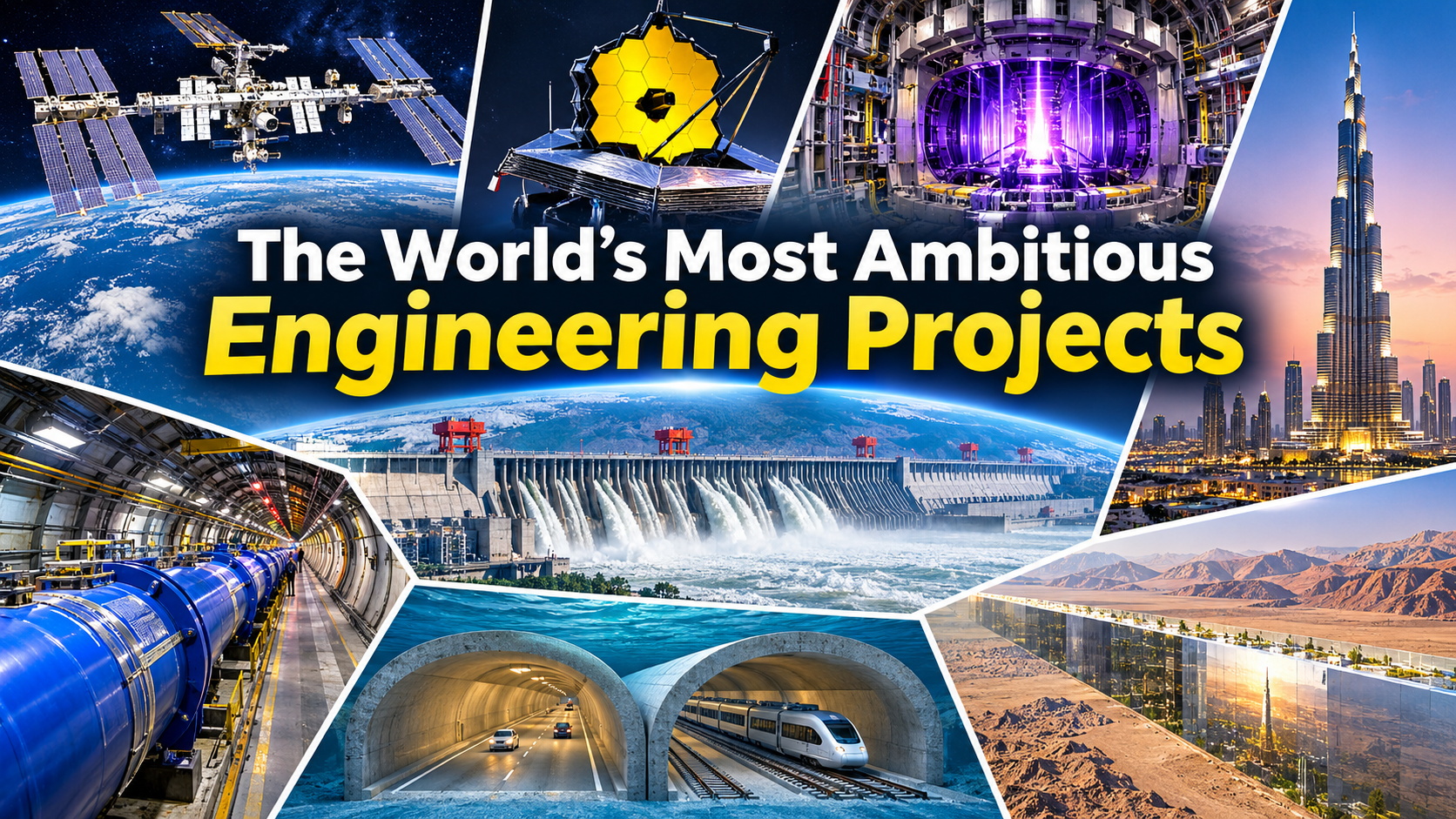

The World’s Most Ambitious Engineering Projects
From enormous hydroelectric dams and underwater tunnels to space stations and nuclear fusion experiments, humanity’s greatest engineering projects are transforming our world and expanding the limits of science.

Introduction: Engineering on an Extraordinary Scale
Throughout history, engineers have turned seemingly impossible ideas into reality. Ancient civilizations built pyramids, aqueducts, bridges, and roads using the technology available to them. Modern engineering has expanded those ambitions into projects involving thousands of specialists, massive machinery, sophisticated computer systems, and international cooperation.
Today’s megaprojects address some of humanity’s most difficult challenges. They generate electricity, improve global transportation, enable scientific discoveries, and support exploration beyond Earth.
However, ambition is not measured by physical dimensions alone. Some of the most remarkable engineering projects involve microscopic precision, extreme temperatures, or machinery operating millions of kilometres from Earth.
Here are eight of the world’s most ambitious engineering projects, including completed achievements, operational scientific facilities, and developments still under construction.
1. International Space Station: A Laboratory in Orbit

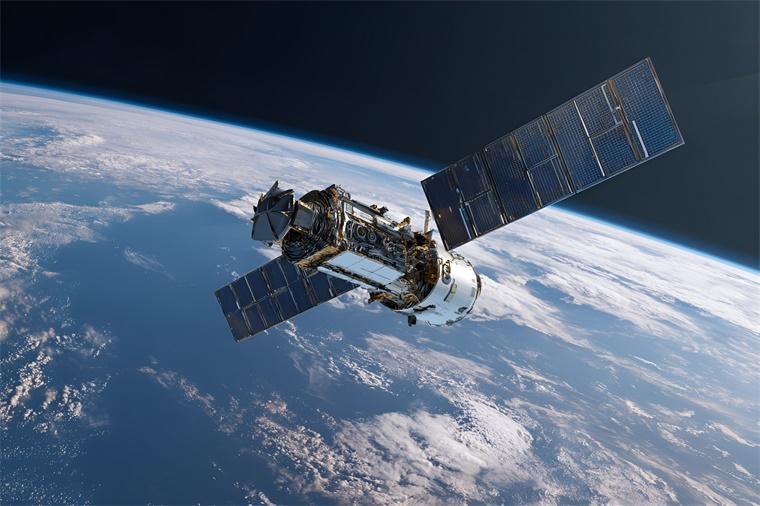
The International Space Station (ISS) is one of the most complex machines ever assembled. Unlike structures built on Earth, the ISS was constructed in orbit, with components transported aboard spacecraft and connected by astronauts and robotic systems.
Construction began in 1998, and the station has maintained a continuous human presence since November 2000.
Orbiting Earth at an altitude of roughly 400 kilometres, the station serves as an international laboratory for experiments involving microgravity, biology, materials science, medicine, and space technology.
Major Engineering Challenges
Engineers must maintain breathable air, clean water, temperature control, communications, power generation, and reliable computing systems in an environment where direct maintenance is extremely difficult.
The station also faces radiation, extreme temperature differences, and the danger of orbital debris.
Its huge solar arrays generate electrical power, while sophisticated life-support systems recycle water and help sustain astronauts during extended missions.
2. ITER: The Quest for Fusion Energy

ITER, located in southern France, is an international experiment designed to demonstrate the scientific and technological feasibility of large-scale nuclear fusion.
Fusion is the process that powers stars. Instead of splitting heavy atoms, as in conventional nuclear fission reactors, fusion combines light atomic nuclei and releases energy.
The potential benefits of successful fusion technology are enormous. It could eventually contribute to low-carbon electricity generation with fuel resources that are widely available.
How ITER Works
ITER uses a tokamak, a doughnut-shaped magnetic confinement device, to hold extremely hot plasma.
The plasma must reach temperatures of approximately 150 million degrees Celsius for the intended fusion experiments, far hotter than the Sun’s core.
Because no ordinary material can withstand direct contact with such plasma, powerful magnetic fields are used to confine it away from the vessel walls.
The system requires superconducting magnets, cryogenic cooling, advanced vacuum technology, specialized materials, and exceptionally accurate manufacturing.
3. Three Gorges Dam: Harnessing the Yangtze River

China’s Three Gorges Dam is one of the largest hydroelectric engineering achievements ever completed.
Located on the Yangtze River in Hubei Province, the dam was constructed to generate large quantities of electricity, support flood management, and improve river navigation.
Its massive concrete structure and associated infrastructure required extraordinary quantities of building materials, sophisticated construction equipment, and extensive river-management operations.
Generating Electricity from Water
Hydroelectric power stations convert the energy of moving water into electricity.
Water passes through turbines connected to generators. The movement of the turbines produces electrical energy that can be transmitted through the power grid.
With an installed capacity of approximately 22,500 megawatts, Three Gorges is the world’s largest hydroelectric power station by installed capacity.
Environmental and Social Consequences
Despite its extraordinary engineering scale, the project has been controversial.
Construction and reservoir filling displaced large numbers of residents, submerged settlements and archaeological areas, and altered local ecosystems.
These consequences show why assessing major infrastructure requires more than evaluating construction success or electricity generation.
4. Fehmarnbelt Tunnel: Building a Connection Beneath the Sea

The Fehmarnbelt Fixed Link is an ambitious transportation project designed to connect Denmark and Germany beneath the Baltic Sea.
The approximately 18-kilometre tunnel is intended to accommodate both road vehicles and railway traffic, improving connections between Scandinavia and continental Europe.
How an Immersed Tunnel Is Constructed
Instead of drilling the entire tunnel through rock, engineers manufacture enormous concrete tunnel elements in a specially designed production facility.
Each completed section is made watertight and floated to its planned position.
The element is then carefully lowered into a prepared trench on the seabed, aligned with neighbouring elements, and connected through engineered waterproof joints.
This approach requires extremely accurate positioning and careful control of marine conditions.
Why It Matters
Once operational, the tunnel is expected to improve transport efficiency and reduce travel times between key areas of northern Europe.
It also demonstrates how prefabrication can be used at enormous scale in underwater civil engineering.
5. Large Hadron Collider: Exploring the Universe’s Fundamental Particles

The Large Hadron Collider (LHC), located near Geneva on the border between Switzerland and France, is the world’s largest and most powerful particle accelerator.
It consists of an underground ring approximately 27 kilometres in circumference.
Scientists accelerate beams of particles to speeds approaching the speed of light and bring them into collision inside highly specialized detectors.
These experiments help researchers investigate the structure of matter and the fundamental forces of nature.
Extraordinary Precision
The LHC uses superconducting electromagnets to control particle beams.
Many of these magnets operate at temperatures of approximately 1.9 kelvin, only slightly above absolute zero.
Maintaining such conditions across large sections of the accelerator requires an advanced cryogenic infrastructure.
The accelerator also depends on ultra-high vacuum systems, precision timing, powerful computing networks, and complex particle detectors.
Research at the LHC contributed to the discovery of the Higgs boson in 2012, one of the most important developments in modern particle physics.
6. Burj Khalifa: Engineering the World’s Tallest Building

Standing 828 metres tall, Burj Khalifa in Dubai represents one of the greatest achievements in modern skyscraper engineering.
Completed in 2010, the tower transformed the possibilities of high-rise construction and demonstrated how innovative structural systems can support buildings of extraordinary height.
Solving the Wind Problem
One of the greatest challenges in designing a supertall building is controlling the forces generated by wind.
At great heights, strong winds create substantial pressure and can cause buildings to sway.
Burj Khalifa uses a buttressed-core structural system, where three wings provide support to a central reinforced-concrete core.
The tower’s stepped design also helps disrupt organized wind patterns, reducing some of the forces acting on the building.
Other Engineering Challenges
Engineers also had to develop solutions for pumping concrete to exceptional heights, transporting people efficiently between floors, managing temperature differences, and supporting the immense weight of the structure.
The resulting building combines structural engineering, architecture, advanced mechanical systems, and carefully coordinated construction management.
7. James Webb Space Telescope: Precision Engineering in Deep Space

Launched in December 2021, the James Webb Space Telescope is one of the most sophisticated scientific spacecraft ever built.
Designed primarily for infrared astronomy, it allows researchers to study distant galaxies, the formation of stars, and the atmospheres of planets orbiting other stars.
A Giant Mirror Folded for Launch
Webb’s primary mirror measures approximately 6.5 metres across and consists of 18 hexagonal segments.
Because the complete structure was too large to fit inside its launch vehicle, engineers designed a system that folded during launch and deployed in space.
The telescope’s enormous five-layer sunshield also had to unfold accurately after launch.
This sunshield protects the sensitive instruments from heat and sunlight, helping the telescope maintain the low temperatures necessary for infrared observations.
Operating Far from Earth
Webb operates near the Sun-Earth L2 region, approximately 1.5 million kilometres from Earth.
At such a distance, conventional astronaut servicing is not practical. The spacecraft therefore depends on highly reliable mechanisms, precise engineering, remote operations, and carefully planned scientific instruments.
8. The Line: An Experimental Vision for Future Cities

The Line, part of Saudi Arabia’s NEOM development, is one of the most ambitious and debated urban engineering concepts of the modern era.
The original proposal envisioned a linear city extending approximately 170 kilometres through northwestern Saudi Arabia.
Its design proposed concentrated urban development, advanced transportation infrastructure, integrated services, and new approaches to city planning.
Extraordinary Construction Challenges
Building such a development at its original proposed scale would require vast quantities of materials, complex foundations, sophisticated transportation networks, and extensive water, energy, and waste-management infrastructure.
Engineers would also need to address temperature control, ventilation, emergency access, transportation efficiency, and environmental sustainability.
Vision Versus Reality
Although the original concept received international attention, implementation has faced challenges involving costs, schedules, financing, and feasibility.
Reports during 2026 described major changes to the project’s proposed scale and development priorities.
For this reason, the original 170-kilometre concept should be treated as an ambitious planning vision rather than a completed or guaranteed construction outcome.
Comparison: Eight Extraordinary Engineering Projects
| Project | Country / Location | Key Engineering Feature | 2026 Status |
|---|---|---|---|
| International Space Station | Low Earth Orbit | Modular orbital laboratory | Operational |
| ITER | France | Experimental fusion reactor | Under construction |
| Three Gorges Dam | China | 22,500 MW hydropower capacity | Operational |
| Fehmarnbelt Tunnel | Denmark / Germany | 18 km immersed tunnel | Under construction |
| Large Hadron Collider | Switzerland / France | 27 km particle accelerator | Operational / upgrading |
| Burj Khalifa | UAE | 828 m skyscraper | Completed |
| James Webb Space Telescope | Deep space, near L2 | 6.5 m segmented mirror | Operational |
| The Line | Saudi Arabia | Original 170 km urban concept | Reduced / uncertain scope |
What Makes an Engineering Project Truly Ambitious?
Although large structures attract public attention, the greatest engineering achievements are not necessarily those with the highest costs or largest dimensions.
A truly ambitious project often combines several characteristics:
- Technical complexity: It requires innovative methods, advanced machinery, or solutions that have never been attempted at comparable scale.
- Scientific innovation: It creates opportunities to discover new knowledge or develop technologies.
- Scale and coordination: It involves extensive resources, specialized workers, and complex logistical operations.
- Long-term impact: It may improve transportation, energy generation, communications, or scientific understanding.
- Environmental responsibility: It must account for effects on ecosystems, communities, and resources.
- Economic feasibility: Even technologically possible projects must address financial sustainability and realistic implementation schedules.
The Future of Engineering Megaprojects
The next generation of large-scale engineering projects could be shaped by artificial intelligence, autonomous construction machinery, advanced materials, robotics, and digital simulation.
Digital twins, for example, allow engineers to build detailed virtual representations of physical assets and monitor how they behave under different operating conditions.
Advanced construction robots could improve precision and safety in challenging environments, while new material technologies may enable lighter, stronger, and more durable structures.
Future energy projects may include larger offshore wind installations, long-distance electrical transmission systems, advanced nuclear technologies, and energy-storage infrastructure.
In space, new orbital facilities and lunar exploration systems will require engineers to solve problems involving long-duration operations, resource management, and manufacturing beyond Earth.
However, the success of future megaprojects will depend not just on technical achievement but also on realistic budgets, environmental protection, safety, and societal value.
Conclusion: Turning Extraordinary Ideas Into Reality
The world’s most ambitious engineering projects demonstrate humanity’s remarkable ability to solve difficult problems through innovation and cooperation.
From the International Space Station and James Webb Space Telescope to the Three Gorges Dam and the Large Hadron Collider, these achievements show how engineering can transform scientific ideas into functioning systems.
Other developments, including ITER, the Fehmarnbelt Tunnel, and experimental urban concepts, demonstrate that the next generation of engineering breakthroughs is still unfolding.
Ultimately, the most meaningful achievements are those that combine technological innovation with lasting benefits for society.
The future of engineering will not simply be about building bigger. It will be about building smarter, more efficiently, and more responsibly.
Sources and Further Reading
- NASA — International Space Station
- ITER Organization — Official Project Information
- China Three Gorges Corporation
- Femern A/S — Fehmarnbelt Tunnel
- CERN — Large Hadron Collider
- Burj Khalifa — Official Website
- NASA — James Webb Space Telescope
- NEOM — The Line Original Project Vision
Editorial update: November 2026. Project descriptions distinguish existing facilities, ongoing construction, and proposed concepts. Images are credited to their respective sources, with reuse terms available on the linked file pages.