


The Science Behind Earth’s Most Extreme Weather
Science & Nature | Meteorology | Extreme Weather
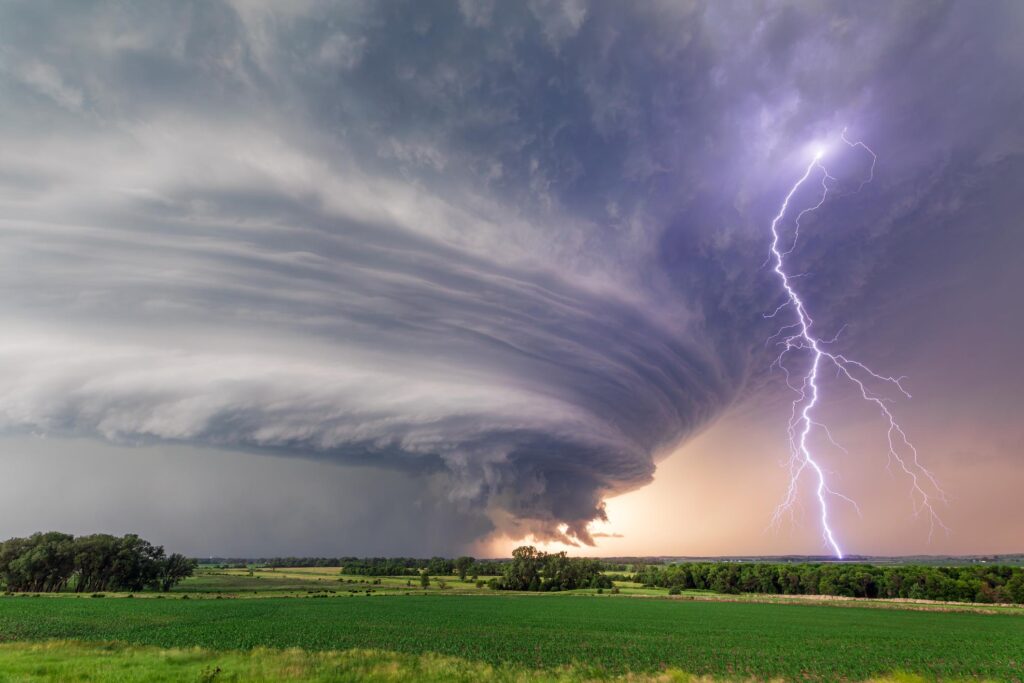
Lightning bolt from a supercell thunderstorm in Nebraska
Critical lifeline for coastal communities used to plan hurricane evacuations could expire on Friday
What’s Causing Extreme Weather? | National Geographic
8
From towering tornadoes and devastating hurricanes to record-breaking heatwaves and powerful blizzards, Earth’s most extreme weather reveals the extraordinary forces operating within our atmosphere.
Introduction: Why Does Extreme Weather Happen?
Earth’s atmosphere is constantly moving, transferring heat and moisture between the oceans, land, and sky. Most of the time, these processes create familiar weather patterns. Under certain conditions, however, they produce extraordinary events capable of reshaping landscapes and threatening communities.
The fundamental ingredients behind many extreme storms are moisture, atmospheric instability, and a mechanism that forces air to rise. Changes in wind speed and direction with altitude can make storms even more organized and destructive. Thunderstorm Ingredients+1
Understanding extreme weather begins with the science of energy, air pressure, temperature, and water.
1. Tornadoes: The Power of Rotating Air
Facts About Tornadoes: Key Stats and Science | MeteoFlow
Tornadoes are violently rotating columns of air extending from thunderstorms to the ground. The strongest can destroy buildings, uproot trees, and throw heavy objects over considerable distances.
Many significant tornadoes develop within supercell thunderstorms, which feature powerful, persistent rotating updrafts.
How tornadoes form:
- Warm, moist air rises rapidly into a thunderstorm.
- Wind shear creates changes in wind speed and direction with height.
- Storm updrafts can organize and intensify atmospheric rotation.
- Under favorable conditions, a concentrated rotating column develops into a tornado.
Not every supercell produces a tornado, and researchers continue to investigate the exact processes that determine tornado formation. National Oceanic and Atmospheric Administration
2. Hurricanes and Typhoons: Giant Ocean-Powered Engines
Cyclone aux Fidji : des rafales de 315 km/h
Hurricanes, typhoons, and tropical cyclones are different regional names for the same type of large-scale tropical storm.
Their main energy source is warm ocean water. Favorable conditions typically include sea temperatures around 26.5°C or higher over a substantial depth, plentiful moisture, a pre-existing disturbance, and relatively weak vertical wind shear.
As warm, humid air rises and water vapor condenses into clouds, latent heat is released. This warms the storm’s core and helps sustain its circulation.
Earth’s rotation contributes to the organized spinning motion, while the resulting pressure differences generate powerful winds.
A mature tropical cyclone can produce:
- Destructive winds
- Torrential rainfall and freshwater flooding
- Coastal storm surge
- Dangerous waves and occasionally tornadoes
The strongest storms are not necessarily the most destructive by wind speed alone. Flooding and storm surge can make even weaker tropical cyclones catastrophic. National Ocean Service+1
3. Extreme Heatwaves: When the Atmosphere Traps Heat
Heatwaves develop when unusually hot conditions persist for several days or longer.
One common mechanism is a slow-moving high-pressure system that encourages air to descend. Descending air compresses and warms, while generally clear skies allow intense solar heating of the surface.
Dry soil can amplify the heat because less incoming energy is used for evaporation and more is converted into sensible heat.
High humidity makes conditions particularly dangerous by reducing the body’s ability to cool itself through sweat evaporation.
Extreme heat can lead to heatstroke, agricultural damage, increased electricity demand, and pressure on water supplies.
4. Flash Floods: When Rainfall Overwhelms the Landscape
Flash floods occur when water accumulates faster than the land and drainage systems can absorb or carry it away.
Powerful thunderstorms, slow-moving rain systems, and atmospheric rivers can deliver enormous amounts of moisture over relatively short periods.
The flood risk depends on rainfall intensity, duration, soil saturation, terrain, and urban development.
Steep valleys and dry desert channels can be especially dangerous because runoff may concentrate rapidly, even when the heaviest rainfall occurs some distance away.
This is why arid regions, including parts of the Arabian Peninsula, can experience severe flash flooding despite generally low annual rainfall.
5. Blizzards: The Science of Extreme Winter Storms
Massachusetts could see first blizzard since 2022 on Monday
Blizzards combine strong winds with falling or blowing snow, creating dangerously low visibility.
They often develop when powerful low-pressure systems interact with cold air masses and moisture-rich air.
Strong pressure differences accelerate winds. Snow particles become suspended in the moving air, producing whiteout conditions.
A blizzard does not always require exceptionally heavy new snowfall. Existing snow on the ground can be lifted by strong winds, making travel extremely hazardous.
6. Dust Storms: When the Desert Takes to the Sky
WMO Airborne Dust Bulletin No. 3 – May 2019
Dust storms occur when strong winds lift loose sand and fine dust particles into the atmosphere.
Some of the most dramatic events, known as haboobs, are generated by powerful thunderstorm downdrafts. When cooled air rushes outward along the ground, it can push a towering wall of dust ahead of it.
Dust storms are especially relevant to the Middle East and North Africa, where dry surfaces and strong winds can reduce visibility, disrupt transportation, and degrade air quality.
Fine dust can travel thousands of kilometers, affecting regions far from its original source.
7. How Climate Change Influences Extreme Weather
Climate change is altering the conditions under which extreme weather develops.
As global temperatures rise, the atmosphere can hold more water vapor, approximately 7% more per 1°C of warming under otherwise comparable conditions. This can increase the potential for intense rainfall.
According to the Intergovernmental Panel on Climate Change (IPCC), human-caused warming has already increased the frequency and intensity of many heat extremes and contributed to heavier precipitation in numerous regions.
However, the effects differ across weather phenomena. Scientists have greater confidence about global trends in heatwaves and heavy precipitation than about long-term changes in tornado frequency. IPCC+1
8. How Scientists Predict Extreme Weather
Modern meteorology combines several technologies to identify dangerous conditions before they occur.
Weather satellites
Track cloud development, storm movement, atmospheric moisture, and large-scale weather systems.
Maria Slams St. Croix, Rips Across Puerto Rico | Weather Underground
Doppler radar
Measures precipitation patterns and radial wind velocities, helping meteorologists detect storm rotation and damaging wind signatures.
2024-10-02 | Apie meteorologinį balioną ir atmosferos radiozondavimą – Meteo LT
Weather balloons
Measure temperature, humidity, pressure, and winds at different altitudes.
Sådan laves en vejrudsigt – Fra observation til prognose – vejrudsigtens vej
Computer forecasting models
Simulate atmospheric physics to estimate how weather systems will evolve, with forecast uncertainty increasing over time.
Conclusion
Earth’s most extreme weather is driven by the interaction of heat, moisture, air pressure, wind, and atmospheric circulation.
Although these forces can produce devastating events, understanding their science allows meteorologists to improve forecasts and communities to prepare more effectively.
Extreme weather reminds us that Earth’s atmosphere is both a life-supporting system and a remarkably powerful natural engine.
WordPress SEO & Publishing Details
SEO configuration Copy SEOSEO title
The Science Behind Earth’s Most Extreme WeatherURL slug
science-behind-earths-most-extreme-weatherMeta description
Discover the science behind Earth’s most extreme weather, from tornadoes and hurricanes to heatwaves, floods, blizzards and powerful dust storms.Focus keyword
Extreme weather scienceCategory
Science & NatureTags
Extreme Weather, Meteorology, Tornadoes, Hurricanes, Heatwaves, Flash Floods, Blizzards, Dust Storms, Climate Change, Atmospheric Science, Weather Forecasting
Suggested featured image: A dramatic multi-storm weather collage with a tornado, hurricane, lightning, heatwave, and blizzard, titled The Science Behind Earth’s Most Extreme Weather.
Authoritative references: NOAA Severe Weather 101, NOAA Hurricane Science, and IPCC Extreme Weather Research.